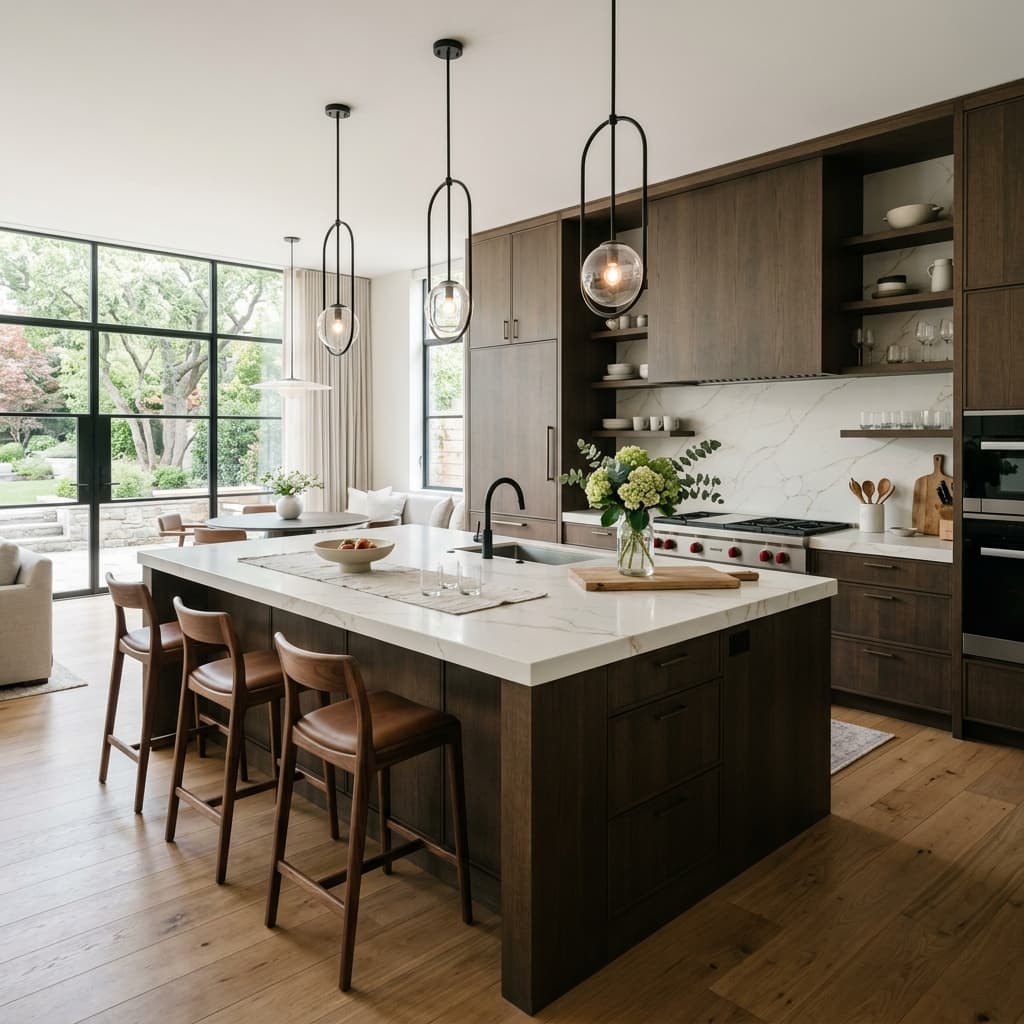
What this service solves
Every kitchen project starts with a clear picture of what needs to change and why. Describe the space, share what is working and what is not, and identify your priorities — comfort, storage, safety, resale value, or a full transformation. The more specific you are, the more useful your estimate conversation can be.
Cabinet refacing, repainting, or replacement
Countertop, sink, backsplash, and faucet updates
Island planning, pantry storage, and lighting improvements
Common projects
Cabinet refacing, repainting, or replacement
Countertop, sink, backsplash, and faucet updates
Island planning, pantry storage, and lighting improvements
Flooring, trim, drywall, and open-layout updates
Options and approaches
Refresh scope
Best when the layout works and the priority is finishes, lighting, counters, or cabinet faces.
Mid-scope remodel
Useful when cabinets, counters, flooring, and fixtures all need coordinated replacement.
Layout change
Adds planning for electrical, plumbing, walls, permits, inspections, and longer sequencing.
Your planning process
- 1
Describe the room, the problem, your goals, your town, your timing, and your budget range.
- 2
Share photos or notes about existing conditions, layout, access, and anything that feels urgent.
- 3
Identify what matters most: cost, timeline, durability, design, storage, safety, or resale readiness.
- 4
Receive a clearer path for comparing scope options, requesting an estimate, or scheduling a walkthrough.
Cost factors
The right estimate depends on existing conditions, finish choices, trade requirements, and town-specific requirements. These are the factors to clarify first:
- Cabinet approach: repaint, reface, stock, semi-custom, or custom
- Countertop material, backsplash complexity, and finish selections
- Whether plumbing, electrical, ventilation, or walls move
- Flooring area, trim details, and appliance readiness
Timeline factors
- Cabinet and countertop lead times
- Inspection needs for electrical, plumbing, or wall changes
- Whether the home needs a temporary kitchen setup
- Material decisions made before demolition starts
Maintenance and care
- Keep caulked joints near sinks and backsplashes sealed.
- Use finish-appropriate cleaners for counters and cabinet fronts.
- Watch for slow leaks below sinks after any fixture change.
FAQs
How do I know if I need a refresh, a remodel, or a full replacement?
Start with what is bothering you most about the space. A refresh tackles finishes and fixtures when the layout works. A remodel changes multiple surfaces and may adjust layout. A full replacement is right when structure, systems, or major changes are needed. Share what you know and your request will help clarify which scope fits.
What affects the cost of kitchen renovations in Connecticut?
Cabinet approach: repaint, reface, stock, semi-custom, or custom; Countertop material, backsplash complexity, and finish selections; Whether plumbing, electrical, ventilation, or walls move; and the condition of the existing space all affect pricing. The best next step is to share project details so scope and priorities can be reviewed honestly.
Will I need permits for this project?
Permit requirements depend on your town and the scope. Structural changes, plumbing, electrical, mechanical work, and some exterior projects may require permits or inspections. Your planning conversation should identify these questions early so there are no surprises later.
What happens after I send my project details?
Your request is reviewed with your actual scope in mind — the room, the problem, your timing, and your priorities. The next step is a real conversation about options, tradeoffs, and what to expect, grounded in what you shared, not a generic script.
Request a quote
Share what you know about your project. The more specific your scope, timing, and priorities, the more useful the follow-up conversation will be.